


Het Binnenklimaatlabel
What is the Indoor Climate Label?
Het Binnenklimaatlabel laat in één oogopslag zien hoe het binnenklimaat van een gebouw is. Het geeft gebouweigenaren ook zekerheid dat de prestatie-eisen worden gehaald.
Dit doet het Binnenklimaatlabel aan de hand van vier onderdelen, gebaseerd op het Programma van Eisen Gezonde Kantoren:
- Lucht
- Licht
- Klimaat
- Geluid
De prestaties van het gebouw op deze vier onderdelen worden door middel van het Binnenklimaatlabel inzichtelijk gemaakt. Je krijgt 365 dagen per jaar actueel inzicht door data vanuit sensortechnologie en menselijke feedback. Het Binnenklimaatlabel heeft 5-lagen; A t/m E, waarbij A het hoogst haalbare niveau is en E het laagste niveau. Het Binnenklimaatlabel wordt afgegeven aan gebouwen als zij minimaal een C behalen, anders is het binnenklimaat onvoldoende.
Waarom een Binnenklimaatlabel?
Hoe weet je of het binnenklimaat op je kantoor gezond en comfortabel is? Met het Binnenklimaatlabel breng je het binnenklimaat op je kantoor in kaart en kan je gemakkelijker een gezond binnenklimaat creëren! Het Binnenklimaatlabel biedt je inzicht in hoe gezond en comfortabel je kantoor is door middel van monitoring en feedback vanuit je medewerkers. Het is namelijk van belang dat je kantoor een gezond binnenklimaat met goede ventilatie heeft, aangezien dit werknemers productiever maakt en het resulteert in minder ziekteverzuim (RVO, 2012). Het Binnenklimaatlabel is de ultieme oplossing voor het verbeteren van jouw kantoor en het bevorderen van de gezondheid en productiviteit van jouw werknemers.
Wat meet het Binnenklimaatlabel precies?
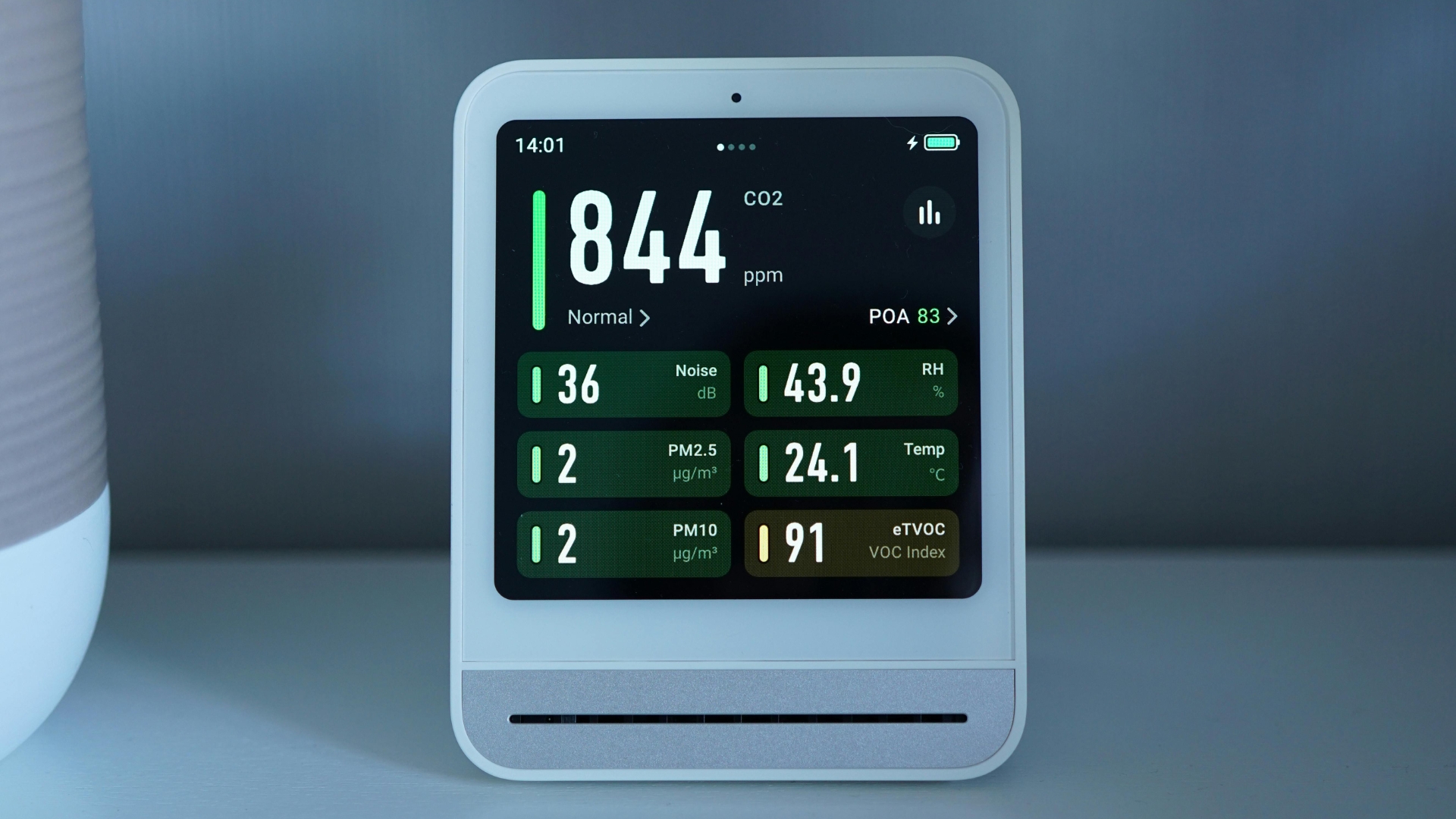
Het Binnenklimaatlabel meet het licht, klimaat, geluid en de lucht op basis van prestatie-eisen. Het klimaat en de lucht worden gemeten door de sensoren. Het licht en geluid wordt gemeten aan de hand van de enquête. Voor de sensoren moeten de onderstaande elementen minimaal gemeten worden:
- Temperatuur [°C]
- CO2 [ppm]
- Relatieve Vochtigheid (RV) [%]
- Fijnstof – PM2.5 [µg/m3]
Voor wie is het label bedoeld?
Het label is bedoeld voor o.a. kantoren, kinderopvang en zorgcomplexen en het Binnenklimaatlabel is dus specifiek voor gebouwbeheerders, facility managers of gebouweigenaren die hun gebouw willen verbeteren. Het Binnenklimaatlabel kan je helpen om je gebouw gezonder en comfortabeler te maken, waarmee je ook nog eens verzuim tegen kan gaan.
Welke normen of richtlijnen liggen eraan ten grondslag?
Het Binnenklimaatlabel is volledig gebaseerd op de normen en richtlijnen die zijn opgesteld in verschillende Programma’s van Eisen van Stichting Binnenklimaattechniek. Voor kantoren is het gebaseerd op het Programma van Eisen Gezonde Kantoren.
Hoe wordt het label toegekend?
Na twee maanden van continue monitoringsdata en de enquête kan er een voorlopig label worden afgegeven. Het definitieve label wordt afgegeven na een jaar, omdat dan pas alle monitoringsdata over de 4 seizoenen beschikbaar zijn. De enquête moet minimaal 1 maal per jaar worden gehouden.
Voordelen van het label in de praktijk
- Inzicht in het binnenklimaat in je kantoor. Monitoring zorgt voor real-life data (meten = weten)
- Minder verzuim
- Hogere productiviteit
- Gezonder kantoor
- Comfortabeler kantoor

Frequently Asked Questions
Here are some of the frequently asked questions about the Indoor Climate Label. Do you have any other questions? If so, please contact Join us.
-
What is the Indoor Climate Label?
The Indoor Climate Label shows at a glance what a building’s indoor climate is like. It also gives building owners the assurance that performance requirements are being met. The Indoor Climate Label does this by assessing four key areas, based on the Healthy Offices Specification: Air, Light, Climate and Noise. Through continuous monitoring and user feedback, you gain insight into your building’s indoor climate.
-
For which buildings is the Indoor Climate Label suitable?
The Indoor Climate Label is currently suitable for offices, healthcare facilities and childcare centres, but may in future also be suitable for homes and schools. These different types of building often require a different approach, which is why the Indoor Climate Label is currently focused primarily on offices.
-
How long is the Indoor Climate Label valid for?
Once an Indoor Climate Label has been issued, it is valid for one year. Based on the survey and the continuous monitoring data, the label will be reassessed once this period has expired to determine what it should be. Should the label change on the basis of the new data, it must be updated.
Example:
- 1 January 2026: The building is equipped with all the necessary measuring equipment.
- 1 March 2026: After two months, the building is awarded a provisional Indoor Climate Label C, based on continuous monitoring and a survey.
- 1 January 2027: The final label is issued for the building. In this case, for example, it is once again Indoor Climate Label C. The Indoor Climate Label C for this building is now valid until 1 January 2028.
- 1 January 2028: Based on continuous monitoring throughout 2028 and a new round of feedback via the survey, the Indoor Climate Label is reassessed. In this case, the assessment shows that the new label is an Indoor Climate Label B. This Indoor Climate Label is once again valid for one year, i.e. until 1 January 2029.
-
How much does an Indoor Climate Label cost?
The Indoor Climate Label has three types of cost items:
- One-off investment (via a technology partner)
- Purchase of measuring equipment: Smart CO₂ and particulate matter monitors that also measure temperature and humidity.
- Consultancy and installation costs for sensor technology: These depend on the size of the building or room and on the technology partner.
- Annual software costs for technology partners
- Software costs: For access to the dashboard and insight into the measurement data. These costs depend on the size of the building or space and on the technology partner.
- Annual costs for the Indoor Climate Label
- Basic management costs: For the management and further development of the Indoor Climate Label.
- Certification fee: For the use of the Indoor Climate Label methodology, including the questionnaire.
- The annual costs for the Indoor Climate Label are set out in the table below:
Number of buildings Price per building 1 – 5 €100 6 – 10 €80 11 – 25 €60 26 – 50 €40 51 – 75 €30 76 – 100 €25 101+ €20 - One-off investment (via a technology partner)
-
How soon after submitting my application can my building be awarded a label?
Once all the sensors have been installed, a provisional label may be issued after two months. This will be based on the survey and the continuous monitoring data collected over the two-month period. The final label will be issued after one year, as this is when all the monitoring data covering the four seasons will be available. This is particularly important for obtaining an accurate estimate of the temperature.
In addition, the speed of the process depends on a number of different factors. For example, the type and size of the building can influence how quickly your building can be awarded a label. In larger buildings, more measuring equipment needs to be installed, which can take longer. It also depends on how busy the Indoor Climate Label’s partners are. The partners can provide a more detailed estimate of the processing time for your specific building and circumstances.
-
Which buildings already have an Indoor Climate Label?
You can easily see which buildings already have an Indoor Climate Label on this page.
-
Who are the founders of the Indoor Climate Label?
The Indoor Climate Label is part of the Indoor Climate Technology Foundation.
-
My question isn’t listed here – how can I get in touch with you?
If your question has still not been answered, please contact us via the contact form.